The billing cycle at a glance
How a quotation turns into an order confirmation, delivery notes and invoices — and what docket does automatically along the way.
Every project bills its work in cycles. A cycle starts with a quotation and ends with the final invoice; everything in between belongs to it. You find all cycles of a project in its Accounting tab.
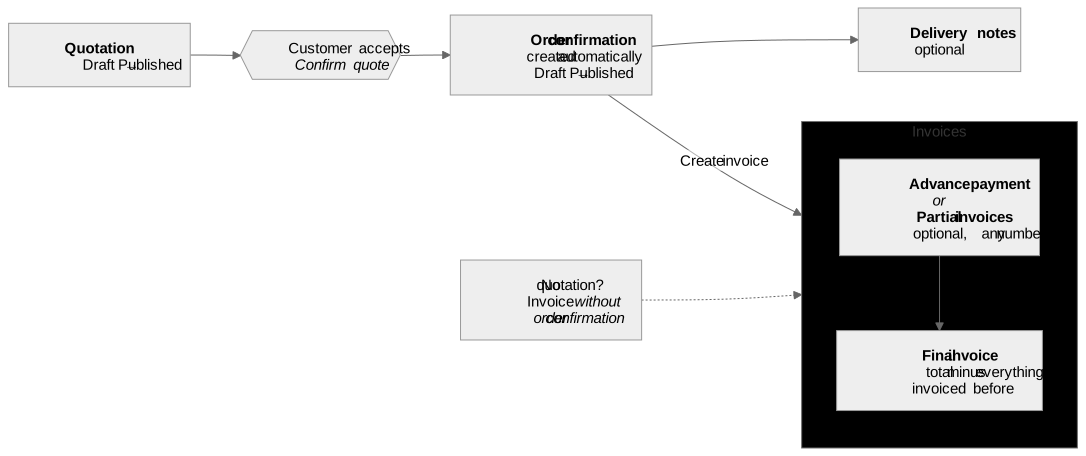
From quotation to order confirmation
- Write the quotation and publish it once it's final. Publishing locks its content — only drafts can be edited. Need to change it? Back to edit mode turns it into a draft again.
- The customer accepts. Use Confirm quote on the quotation. You can attach the customer's signed confirmation (a PDF up to 2 MB) and a note.
- docket creates the order confirmation for you, with the quotation's positions. Confirming again later updates it instead of creating a second one. Publish it when it's ready to go out.
docket doesn't email documents to your customer itself: open or download the PDF from the document and send it the way you always do. Only send published documents.
Delivery notes
Optional. Create them from the order confirmation (Create delivery note) — as many as you deliver in parts. They take over the order confirmation's content.
Invoices
Create invoices from the order confirmation (Create invoice). Which types you can create depends on what the cycle already has:
| Type | When |
|---|---|
| Advance payment | Before the work: a percentage or a fixed amount of the total. Not combined with partial invoices. |
| Partial invoice | Bills only the positions you select. As many as you need. Not combined with an advance payment. |
| Final invoice | Bills the rest: the full total minus everything invoiced before in this cycle. After it, the cycle takes no more invoices. |
No quotation for this job? Create an invoice without order confirmation — it can also take the tracked time as positions.
docket keeps an eye on the amounts: it warns when the invoices of a cycle exceed the quotation total, and when an advance payment or partial invoices already cover all of it, offers to convert the invoice into the final one.
An invoice's life
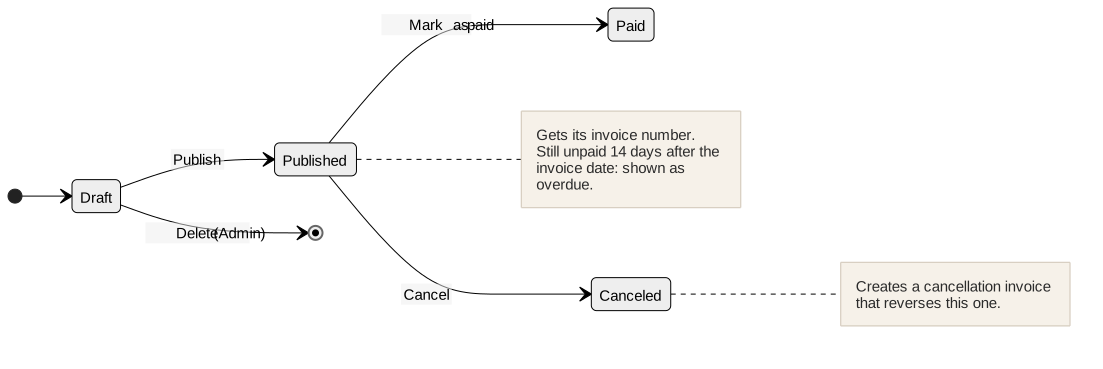
- Publishing gives the invoice its number. Project Managers and Admins can publish; deleting a draft is Admin-only.
- Mark as paid when the money arrives, optionally with the payment date.
- Canceling never deletes an issued invoice: docket creates a cancellation invoice that reverses it figure for figure and gets its own number when published.
- A published invoice that is still unpaid 14 days after its invoice date counts as overdue.
The cycle at a glance in your project list
Each cycle shows up in the projects list as a coloured dot (Project Managers and Admins only), so you can see where billing stands without opening the project. You can filter the list — and the Forecast — by it.
| Status | Meaning |
|---|---|
| Quote draft | The quotation is still being written. |
| Quote sent | The quotation is published. |
| Quote confirmed, awaiting invoice | The customer accepted; nothing invoiced yet. |
| Invoice open | A published invoice waits for payment. |
| Invoice overdue | A published invoice is unpaid 14 days after its invoice date. |
| Paid | An invoice of the cycle is paid. |
| Canceled | The quotation — or every invoice of the cycle — was canceled. |
Related
- The quotation & invoice editor — phases, positions, services and the totals in detail.
- External costs — supplier invoices and how they reach the quotation.
- User roles — who may do what.